How to Choose Onsens in Osaka Without Awkward Moments for Tattooed Travelers
Hi, this is Yusuke from Discover Japan Hidden.
If you searched osaka tattoo, you’re probably trying to solve something very practical. Can you enjoy an onsen in Osaka with tattoos, or will you get stopped at the entrance? And even if you’re technically allowed, will it feel awkward once you’re inside? Yeah, this is the part that quietly stresses people out.
When travelers search around Osaka tattoo shop, Osaka tattoo artists, Osaka tattoo studios, Osaka tattoo prices, or Osaka tattoo English speaking, they’re usually planning a fun side quest. But when they search tattoo friendly onsen, Osaka onsen tattoos allowed, or tattoo-friendly hotels Osaka, the goal changes. It becomes: “I just want to relax without drama.”
So in this guide, I’m not just listing rules or repeating Osaka tattoo culture and rules. I’m turning the hidden, unspoken bits into a simple decision you can make. If you’re also curious about Japanese tattoo Osaka (irezumi Osaka) or Osaka tattoo convention, I’ll touch those too. But the main point is: you should be able to decide where to go, what to avoid, and what your best backup plan is.
- How to decide if an Osaka onsen will feel stress-free with tattoos
- How to read the real meaning of tattoo OK in Japan
- How to pick places that won’t get awkward inside
- What to do if you need English support or clear signage
How to Judge Onsen Choices Without Anxiety for Osaka Tattoos
Let’s start with my main stance: I don’t judge an onsen by “Can you enter?” I judge it by “Can you enter without awkward moments?” The label tattoo OK is not a single standard in Japan. It can mean completely different things depending on the place, the staff, and even the mood of other guests. So I’m going to help you decide with less guesswork.
Key Decision Points Travelers First Struggle With Osaka Tattoos
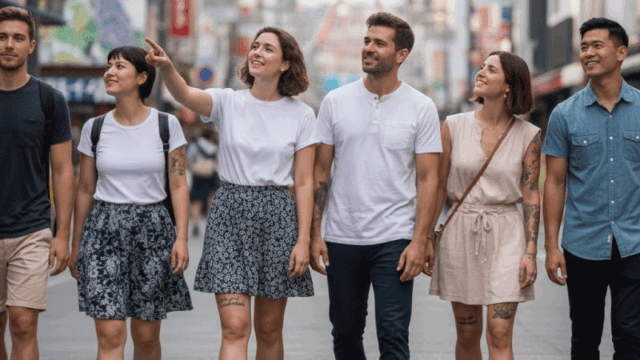
If you have tattoos and you’re new to Japanese baths, the first confusion is always the same: you’re searching for a clean Yes/No, but what you find is a messy “It depends.” And honestly, it’s not because Japanese people are trying to be vague. It’s because most places are managing comfort for everyone, not writing policies for travelers.
So here’s the key mindset shift. In Japan, the real question isn’t “Is tattoo entry allowed?” The real question is: “What kind of tattoo allowance is it, and what kind of vibe comes with it?” That’s how you avoid awkwardness.
Step 1: Identify which of the 4 allowance types it is
I always separate these 4 types (never mix them)
- Fully OK (no restrictions): size doesn’t matter, no cover needed
- Small tattoos only OK: size rules exist, but they’re often fuzzy in practice
- Cover sticker required: you must fully cover, sometimes staff will check
- Private bath only OK: public bath is not allowed, but family bath is fine
Step 2: Decide based on “awkward risk,” not only rules
Even if two places have the same written rule, the experience can be totally different. A big, tourist-friendly complex might say cover sticker required, and you’ll see other tattooed travelers doing the same thing. It feels normal. A small local bath might also say cover sticker required, but the vibe can be quiet, elderly guests might stare, and you’ll spend the whole time thinking about your tattoo instead of relaxing.
Step 3: Use a fast decision flow (Yes/No style)
Quick flow I recommend
- If your tattoo is large or hard to cover → choose private bath only
- If your tattoo is small and easy to fully cover → cover-sticker places can work
- If you want zero stress on your first try → fully OK or private bath is best
- If you need English clarity → look for clear English signage or tourist-heavy places
One more thing: “OK” can change by time and situation. For example, staff might be flexible on a quiet weekday afternoon but stricter on a crowded weekend. That’s why I keep repeating the same rule: your goal is not entry, it’s comfort.
Important
Policies can change without notice. Treat everything as a guide, and confirm with the facility’s official information before you go.
Osaka Tattoo Culture and Things Travelers Should Know
Osaka is one of the easiest big cities in Japan for tattooed travelers to move around. Street fashion is loud, people are direct, and you’ll see tourists everywhere. So for daily life, you can usually wear short sleeves, enjoy food spots, shop, and explore without anyone caring. That said, baths are their own world. The expectations inside an onsen or sento are closer to “quiet shared space” than “tourist attraction.”
Why tattoos can still feel sensitive in Japan
Even today, many Japanese people grew up with the idea that tattoos are linked to organized crime. Younger generations are changing, and Osaka is fairly open, but the older cultural memory is still there. So a facility might not be “anti-foreigner” or “anti-tattoo” personally. They might just be trying to avoid complaints from other guests and keep the mood calm.
What travelers often misunderstand
When travelers hear “Japan is strict about tattoos,” they sometimes assume every place will reject them. That’s not accurate. The reality is more nuanced: it’s about the type of place and the audience inside. Tourist-heavy areas tend to be more flexible because staff are used to different cultures and they receive more questions. Local places can be wonderful too, but they can also feel more sensitive because everyone knows the usual norms.
A small legal note, because people ask
Some travelers worry whether tattooing itself is “legal” in Japan. Tattoo studios operate widely, and a major Supreme Court decision in 2020 clarified the situation around tattooing and medical licensing. If you like reading primary sources, here’s the reference.
(Source: Supreme Court of Japan, 2020 decision on tattooing and medical licensing)
My local tip
If your main goal is onsen comfort, don’t over-focus on culture debates. Just pick the type of place that matches your tattoo size and your tolerance for “local vibes.” That’s the practical solution.
Can You Use Onsens in Osaka with Tattoos?
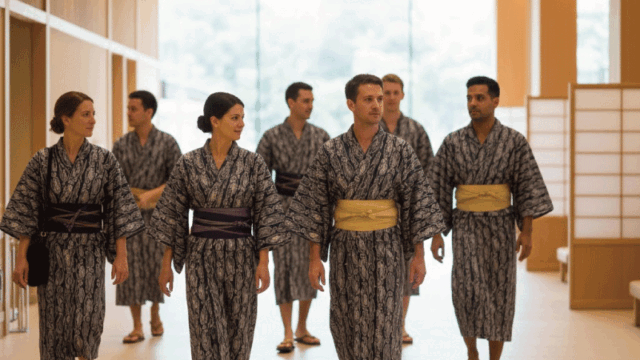
So, can you use onsens in Osaka with tattoos? The honest answer is: yes, sometimes. But the version that actually helps you is: yes, if you choose the right type of facility for your tattoo and your personality. This is where travelers get stuck because they want one universal rule. Japan doesn’t work that way for baths.
How to interpret Osaka onsen tattoos allowed results
When you see pages or posts saying “Osaka onsen tattoos allowed,” treat that as a starting hint, not a final verdict. You still need to identify which of the 4 categories it falls into: fully OK, small only, cover sticker required, or private bath only. The difference matters more than the word allowed.
What “awkward” looks like in real life
Awkward doesn’t always mean you get refused. Sometimes you enter, pay, and everything is technically fine. But you might notice staff whispering, another guest staring, or a sign that only makes sense once you’re already inside. If you’re someone who gets stressed by social tension, that can ruin the whole experience. That’s why I keep saying: “stress-free” is the goal.
A simple comfort checklist before you go
- Is there clear signage about tattoos (and ideally English too)?
- Does the place mention cover stickers specifically?
- Is it a big facility with tourists, or a tiny local bath?
- Can you switch to a private bath plan if needed?
Please be careful with assumptions
Even when a place is tattoo-friendly, your situation matters. Fresh tattoos may require avoiding bathing for hygiene and healing reasons. If you’ve just gotten ink, follow your artist’s advice and consult a medical professional if you have any concerns.
Osaka Facilities Where Tattoos Are Allowed
When you’re searching for tattoo-friendly options, you’ll see a lot of “lists.” I’m not against lists, but lists alone don’t solve your problem. A list doesn’t tell you if the place will feel comfortable for you. So here’s how I suggest you read the situation like a local guide, even if you’ve never been to Japan before.
How I judge “safe for travelers” facilities
I focus on how clearly the facility explains things. The more specific the rules, the less awkward it tends to be. If the policy is clear, staff are usually used to questions, and other guests are less surprised. If it’s vague, everything becomes case-by-case, and that’s where awkwardness grows.
Green flags for stress-free bathing
- Clear categories (small only, cover required, private only, etc.)
- English guidance or staff used to foreign guests
- Visible system for cover stickers (sold or provided)
- Private bath options if you want a guaranteed plan
Use this mini-table to decide fast
| Allowance type | Best for | Avoid if |
|---|---|---|
| Fully OK | Large tattoos, first-timers | You need strict quiet privacy |
| Small only | Tiny tattoos, low anxiety | Your tattoo size is borderline |
| Cover required | Small-to-medium tattoos you can fully cover | You hate rule-checking at reception |
| Private only | Maximum comfort, any tattoo size | Your budget is very tight |
If you want broader “tattoo-friendly onsen” options across Japan (not only Osaka), I’ve organized guides by traveler worries, not destinations:
Tattoo-friendly onsen guides (stress-free options)
How to Cover Tattoos in Osaka Without Awkward Moments
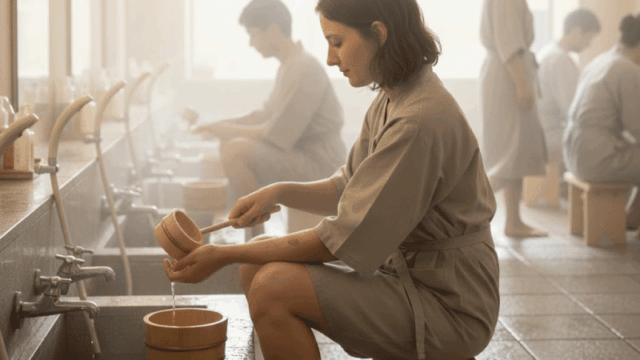
Covering tattoos is one of the most common strategies in Japan, and yes, it can work. But it’s also where travelers make the biggest mistakes, because they assume “covered = safe.” In practice, covering is only safe when three things line up: the facility’s policy, your tattoo size and placement, and the atmosphere inside.
What “cover sticker required” usually means
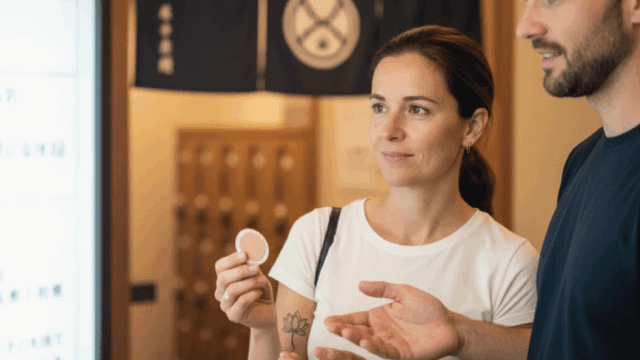
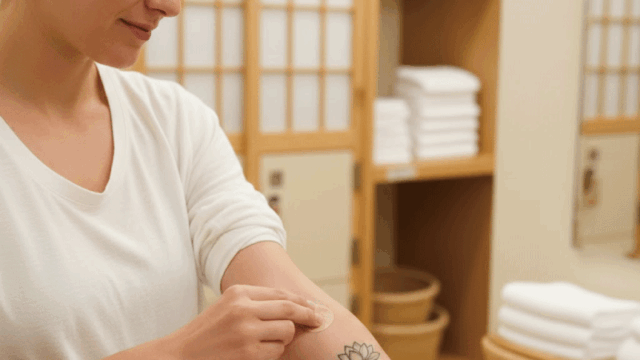
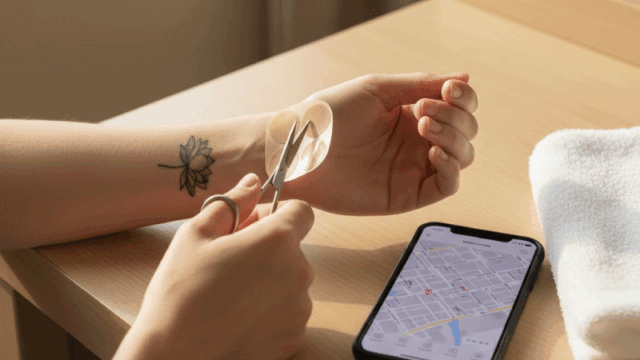
In many places, cover stickers (or tape) are expected to fully hide the tattoo. Not “mostly hidden.” Fully. If your tattoo is on a joint or a curved area, stickers might peel. If it’s large, you might need multiple stickers. Some facilities sell them at reception, some don’t. That’s why you should plan to bring your own if your comfort depends on it.
Practical cover tips (simple, not fancy)
- Use waterproof cover stickers designed for skin
- Test at your hotel first so you know it won’t peel
- Bring extras (sweat and steam are brutal)
- If it starts peeling, switch to private bath next time
The awkwardness trap
Even if you cover perfectly, you might still feel stressed if the bath is very local and quiet. People may look at the sticker itself, because it’s unusual. That doesn’t mean you did something wrong, but if you hate attention, the sticker plan might not be the best plan for you. For many travelers, private baths are actually the cheapest “peace of mind” you can buy on a trip.
Health note
If your tattoo is fresh, bathing can increase infection risk or slow healing. Follow your tattoo artist’s aftercare instructions and consult a medical professional if you’re unsure.
Osaka Tattoos and Public Etiquette
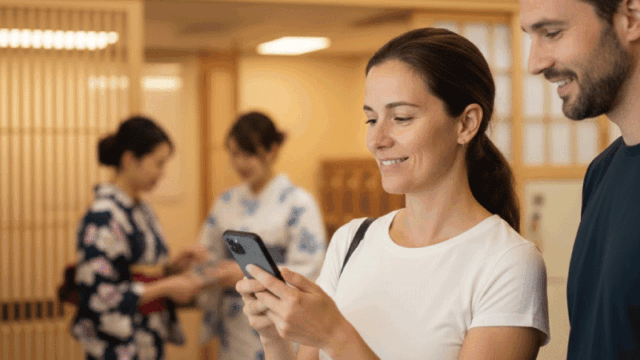
Public etiquette is the secret weapon for avoiding awkward moments in Japan. Most problems don’t start with the tattoo itself. They start when someone feels the space is being “used differently” than expected. If you follow the onsen rhythm, people relax. If you look unsure or break a basic rule, attention increases.
Onsen basics that matter most
- Wash your body before entering the bath
- Don’t put your towel in the bath water
- Keep your voice low (people come to de-stress)
- If you have long hair, tie it up
Now, the tattoo-specific etiquette is mostly about not making it a “topic.” If the place allows tattoos, great. You don’t need to announce it. If you’re covering, cover quietly and move on. If you’re in a local place and you notice strong stares, don’t escalate. Just stay calm, finish your bath, and choose a different type of facility next time. That’s the low-stress move.
Small cultural detail
In Japan, comfort is often protected through “silent rules.” People don’t always tell you directly. So your best strategy is to pick places where the rules are clearly stated and travelers are common.
If you want a wider guide to avoiding unspoken etiquette mistakes (not only baths), this is useful:
Things not to do in Japan (avoid awkward mistakes)
How to Avoid Awkward Situations with Osaka Tattoos

Now we move from “understanding” to “deciding.” I’m going to make it easier for you to choose: go, avoid, or use a backup plan. Again, my standard is simple: will it be stress-free for you? If the answer isn’t clearly yes, don’t force it. Japan is much more enjoyable when you choose comfort over pride.
How to Decide What to Do with an Osaka Tattoo Situation

This is the exact decision template I use with travelers. It’s quick, it’s honest, and it avoids the “maybe” trap. Use it like a filter. If a facility matches your situation, go. If not, skip it without guilt.
This onsen is for you if…
- Your tattoo is small, or you can fully cover it without stress
- You’re new to onsen and want a clear, tourist-friendly environment
- You prefer places with English guidance or staff used to questions
- You value comfort more than “trying the most local place”
This onsen is NOT for you if…
- Your tattoo is large and covering would be a constant worry
- You hate the feeling of being watched or judged
- You don’t want to negotiate at reception
- You’ll feel stressed the whole time even if entry is allowed
Bottom line: decide based on the experience you want. “Allowed” is not the finish line. Feeling relaxed is.
If you’re still unsure: choose the lowest-risk option
If it’s your first or second trip to Japan, I strongly recommend starting with either a fully OK place or a private bath. Once you’ve experienced the flow, you can experiment with more local settings. That’s not being cautious. That’s being smart with your limited travel time.
How to Choose an Osaka Tattoo Shop
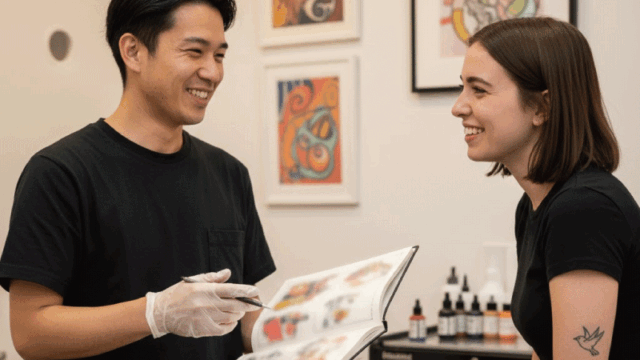
Many people searching osaka tattoo are also considering getting ink while they’re here. Osaka has a strong tattoo scene, and you’ll find a wide range of Osaka tattoo studios and Osaka tattoo artists, from traditional Japanese styles to modern fine-line work. But when you’re traveling, the “best” shop isn’t only about artistry. It’s about communication, timing, and safety.
What matters most for travelers
- Scheduling clarity: can they fit your travel dates without rushing?
- Design confirmation: do you approve the size and placement clearly before needle time?
- Aftercare support: do they explain what to do during travel (walking, heat, showers)?
My simple shop checklist
- They reply clearly and confirm details in writing
- Their portfolio matches your style (don’t compromise here)
- They explain aftercare in a way you understand
Walk-ins exist, but popular places fill up fast. If your trip is short, plan ahead. And remember: getting a tattoo and going to onsen right after is usually not a great combo for healing. Build your schedule around that.
English Support at Osaka Tattoo Studios
English support is not just “Can they speak English?” The real question is: can they prevent misunderstandings? Tattoos are permanent. So even small confusion about size, placement, or shading can lead to regret. In Osaka, many artists are used to foreign clients, but the level of English varies.
How to judge English support before you book
I look for communication patterns, not perfect grammar. If an artist asks you to confirm details, sends reference images, and repeats the plan back to you, that’s a very good sign. If the messages are short and vague, it might still be fine, but you should slow down and ask more questions.
Easy questions you can ask (and should)
- Can you confirm the final size in centimeters?
- Can you send the placement mock-up photo?
- What is included in the price (touch-up, aftercare wrap)?
If you need maximum clarity, choose a studio that mentions Osaka tattoo English speaking clearly. It often means the staff are used to explaining rules and aftercare to travelers, which reduces stress on your side.
Osaka Tattoo Prices and Typical Cost Range

Let’s talk money, because Osaka tattoo prices can feel confusing when you’re comparing across countries. Prices vary by artist skill, style, detail, and time. So I can’t give you one fixed number, and honestly, you shouldn’t trust any page that claims a single “standard price.”
A realistic way to think about pricing
In Japan, many studios have a minimum charge. Small tattoos are not always “cheap,” because setup time, sterilization, and design prep still exist. Larger pieces are often priced by time. The cleanest approach is to request an estimate based on your idea and size. Treat any numbers as a general guide only.
Please treat price info as a rough guide
Prices and policies change, and each design is different. For accurate pricing, check the studio’s official information and ask for a written estimate. If you have medical or skin concerns, consult a medical professional before getting tattooed.
Travel-budget tip
If you’re deciding between “more sessions” or “smaller design,” choose what fits your travel schedule. Rushing a tattoo to catch a train isn’t fun. Give yourself buffer time, especially if you’re heading to Kyoto, Tokyo, or using Shinkansen right after.
Osaka Tattoo Studios Hygiene Standards
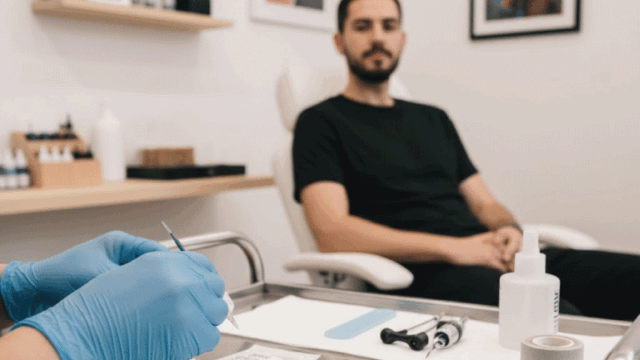
Safety and hygiene are non-negotiable. The good news is: many Osaka tattoo studios take cleanliness seriously. The tricky part is that as a traveler, you might not know what to look for. So let me translate it into visible behaviors.
What you can check with your own eyes
- They use new disposable needles and open packages in front of you
- They wear gloves and change them when needed
- Surfaces are wiped and tools are organized, not chaotic
- Aftercare instructions are specific, not vague
If something feels off, you can stop
You are allowed to ask questions, request clarification, or even walk away. A professional studio won’t get angry at careful clients. If you feel pressured, that’s already a red flag.
Health note (because it matters)
If you have allergies, sensitive skin, or any health condition, don’t gamble. Let the studio know, and if you’re unsure, consult a medical professional. Also, aftercare is part of hygiene. If you ignore aftercare, even a clean studio can’t protect you from problems later.
Osaka Tattoo: How to Decide with Confidence
Let’s pull everything together, because you came here to decide, not to collect trivia. My core message is simple: tattoo OK is not a guarantee of comfort. Your goal is to enjoy Japan without awkward moments.
My stress-free decision order
- If it’s your first onsen: choose private bath or fully OK
- If you’re using cover stickers: only go where rules are clear
- If your tattoo is large: don’t force local public baths
- If you feel unsure: switch plans early, not at the entrance
And please remember: policies can change. For the final call, check the facility’s official information, and if you need certainty, contact them. That one step saves you the most stress.
Day Trip Wrap: Atami-onsen
If you’re thinking beyond Osaka, Atami-onsen is a common day-trip idea, especially from Tokyo. It’s easy to reach, and the town is built around the onsen culture. But just like Osaka, “tattoo friendly” is not universal. It’s facility-by-facility, and the vibe can vary a lot.
How to use Atami as a low-stress option
If your goal is to bathe without anxiety, look for places that clearly explain their tattoo conditions (fully OK vs cover vs private only). If you’re traveling with friends or family, private baths can make the day smoother. If you’re solo and want the classic public bath feel, pick a place where rules are clear and tourists are not unusual.
I’ve organized Atami information in the same way, focusing on comfort and avoiding awkward moments:
Atami Onsen complete guide (tattoo rules & comfort)